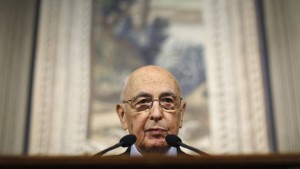
Classe politica italiana sperimenta la clonazione presidenziale

napolitanonapolitano
Ma alcuni scienziati americani  segnalano i rischi di una tale operazione.

WHAT ARE THE RISKS OF CLONING PRESIDENTS?

When we hear of cloning successes, we learn about only the few attempts that worked. What we don’t see are the many, many cloning experiments that failed! And even in the successful clones, problems tend to arise later, during the president’s development to adulthood.

Cloning presidents shows us what might happen if we try to clone humans. What have these presidents taught us about the risks of cloning?

1. High failure rate

Cloning presidents through somatic cell nuclear transfer is simply inefficient. The success rate ranges from 0.1 percent to 3 percent, which means that for every 1000 tries, only one to 30 clones are made. Or you can look at it as 970 to 999 failures in 1000 tries. That’s a lot of effort with only a speck of a return!

Why is this? Here are some reasons:

  • The enucleated egg and the transferred nucleus may not be compatible
  • An egg with a newly transferred nucleus may not begin to divide or develop properly
  • Implantation of the embryo into the surrogate mother might fail
  • The pregnancy itself might fail

2. Problems during later development

Cloned presidents that do survive tend to be much bigger at birth than their natural counterparts. Scientists call this “Large Offspring Syndrome” (LOS). Clones with LOS have abnormally large organs. This can lead to breathing, blood flow and other problems.

Because LOS doesn’t always occur, scientists cannot reliably predict whether it will happen in any given clone. Also, some clones without LOS have developed kidney or brain malformations and impaired immune systems, which can cause problems later in life.


DOLLY

3 Commenti

  1. […] WHAT ARE THE RISKS OF CLONING PRESIDENTS? When we hear of cloning successes, we learn about only the few attempts that worked. What we don’t see are the many, many cloning experiments that failed! And even in the successful clones, problems tend to arise later, during the president’s development to adulthood. Cloning presidents shows us what might happen if we try to clone humans. What have these presidents taught us about the risks of cloning? https://www.nazioneindiana.com/2013/04/21/classe-politica-italiana-sperimenta-la-clonazione-presidenz… […]

  2. As you explained, the case of a LOS syndrome can affect different organs, therefore, – referring to the peculiar presidential clones represented by the first two graphics at the top of the article – the question is: which shall be the organ bigger than the one in the original mother-clone?
    the answer is as important as it can change a simple LOS into an awful LOSS

I commenti a questo post sono chiusi

articoli correlati

Il desiderio in manif. Nota sul 5/11 parigino

di Andrea Inglese
La presenza massiccia degli studenti a una manifestazione intersindacale non è solo una questione di sovrappiù numerico. Muta globalmente la prospettiva della lotta. Alla logica razionale della negoziazione sindacale, i giovani aggiungono il desiderio.

⇨ SONDEPOETICHE: n° 2 / Scrittura & Cinema #1

SONDEPOETICHE, radio fanzine e podcast, a cura di Gianluca Codeghini
e Andrea Inglese In questo numero si fronteggiano in allegra inimicizia e irresistibile attrazione: scrittura e cinema. Innesco inevitabile Corrado Costa & invitato speciale Gary Hill.

⇨ SONDEPOETICHE: n° 1 / Poesia & Documento #1

SONDEPOETICHE, radio fanzine e podcast, a cura di Gianluca Codeghini
e Andrea Inglese
Il rapporto tra poesia e documento attraverso il lavoro di quattro voci contemporanee: Florinda Fusco, Mariangela Guatteri, Alessandra Cava, Jean-Patrice Courtois.

In margine a un’intervista di Gianluigi Simonetti e Walter Siti

di Andrea Inglese
Davvero la faccenda della poesia oggi si riassume a un immaturo pregiudizio contro la metrica tradizionale? Non pensi, invece, che la prosa in prosa, le poetiche non assertive, siano alcune vie, tra diverse altre, per fare qualcosa di diverso rispetto alla letteratura standard e a quella edificante... ?

⇨ SONDEPOETICHE : n° 0 / Alessandro Broggi

SONDEPOETICHE, radio fanzine e podcast, a cura di Gianluca Codeghini
e Andrea Inglese
. Puntata n° 0 dedicata ad Alessandro Broggi
. Una collaborazione tra Radio Arte e Nazione Indiana.

Guy Bennett: un’intervista

Un'intervista a tutto campo con Guy Bennett, scrittore di Los Angeles, sulla sua attività poetica e non-solo, sul suo rapporto con l'ambiente letterario negli USA e in Francia, sul transito dalla lingua madre a quella francese... A cura di Andrea Inglese
andrea inglese
andrea inglese
Andrea Inglese (1967) originario di Milano, vive nei pressi di Parigi. È uno scrittore e traduttore. È stato docente di filosofia e storia al liceo e ha insegnato per alcuni anni letteratura e lingua italiana all’Università di Paris III. Ora insegna in scuole d’architettura a Parigi e Versailles. Poesia Prove d’inconsistenza, in VI Quaderno italiano, Marcos y Marcos, 1998. Inventari, Zona 2001; finalista Premio Delfini 2001. La distrazione, Luca Sossella, 2008; premio Montano 2009. Lettere alla Reinserzione Culturale del Disoccupato, Italic Pequod, 2013. La grande anitra, Oèdipus, 2013. Un’autoantologia Poesie e prose 1998-2016, collana Autoriale, Dot.Com Press, 2017. Il rumore è il messaggio, Diaforia, 2023 (Premio Pagliarani 2024). Prose Prati, in Prosa in prosa, volume collettivo, Le Lettere, 2009; Tic edizioni, 2020. Quando Kubrick inventò la fantascienza. 4 capricci su 2001, Camera Verde, 2011. Commiato da Andromeda, Valigie Rosse, 2011 (Premio Ciampi, 2011). I miei pezzi, in Ex.it Materiali fuori contesto, volume collettivo, La Colornese – Tielleci, 2013. Ollivud, Prufrock spa, 2018. Stralunati, Italo Svevo, 2022. Storie di un secolo ulteriore, DeriveApprodi, 2024. Romanzi Parigi è un desiderio, Ponte Alle Grazie, 2016; finalista Premio Napoli 2017, Premio Bridge 2017. La vita adulta, Ponte Alle Grazie, 2021. Saggistica L’eroe segreto. Il personaggio nella modernità dalla confessione al solipsismo, Dipartimento di Linguistica e Letterature comparate, Università di Cassino, 2003. La confusione è ancella della menzogna, edizione digitale, Quintadicopertina, 2012. La civiltà idiota. Saggi militanti, Valigie Rosse, 2018. Con Paolo Giovannetti ha curato i volumi collettivi Teoria & poesia, Biblion, 2018 e Maestri Contro. Brioschi, Guglielmi, Rossi-Landi, Biblion, 2024. Traduzioni Jean-Jacques Viton, Il commento definitivo. Poesie 1984-2008, Metauro, 2009. È stato redattore delle riviste “Manocometa”, “Allegoria”, del sito GAMMM, della rivista e del sito “Alfabeta2”. È uno dei membri fondatori del blog Nazione Indiana e il curatore del progetto Descrizione del mondo (www.descrizionedelmondo.it), per un’installazione collettiva di testi, suoni & immagini.
%d blogger hanno fatto clic su Mi Piace per questo: